
An Ethnographic Anatomy of Populist Systems
Executive Summary
The Core Problem is Structural, Not Educational: The rise of populist belief is not driven by ignorance or manipulation alone, but by a structural process of human cognition. When economic pressure and symbolic loss create an environment of displacement, "amplifiers"—such as charismatic leaders and algorithms—transform these latent grievances into a shared, hardened reality.
Why Fact-Checking Fails: Citizens do not process political claims as neutral researchers; instead, their cognition uses a protective filter called Cognitive-Affective Mediation. If a political narrative aligns with a deep-seated identity or grievance, it bypasses logic and becomes a symbolic truth. Because of this, traditional fact-checking is often ineffective.
The Four Pillars of Resilience: Hoping good information will naturally outcompete bad information in a deregulated attention market is a mistake. Building democratic resilience requires actively strengthening the four pillars of institutional constraint: Education, Media, Science, and Justice.
Prologue
More than a quarter century has passed since I first encountered ethnographer Harry Wolcott’s reflections on travel. He wrote that “when we travel, we expect to experience and learn about new places and unfamiliar cultures—but inevitably, we end up learning much more about our own people and our own place”. Over time—and across more than one hundred countries working in human and social development—this observation shifted from an intellectual curiosity to something closer to a professional inevitability. The discipline of ethnography has long been less about documenting others than it is about unsettling our own assumptions. This essay emerges from that accumulation of encounters.
It is not written as a work of formal political science, though it draws extensively from it. Nor is it intended as a critique of those whose political views diverge from mainstream liberal-democratic norms. Rather, it is an attempt to understand a question that has become increasingly difficult to ignore: why do individuals—often thoughtful, articulate, and professionally competent—support political movements and leaders that appear, to others, contradictory, illogical, or even self-defeating? The answer, I have come to believe, is neither ignorance nor manipulation alone. It is structural.
What follows is an attempt to map that structure—what I refer to as an ethnographic anatomy of populist systems—through a model composed of core elements that interact continuously: context, drivers, amplifiers, and outcomes, all mediated by two cross-cutting systems that shape how information is encountered and how it is made meaningful. These elements do not operate in isolation, nor do they unfold in a simple linear sequence. They form a dynamic system—recursive, adaptive, and deeply embedded in lived experience. Understanding that system is not a solution. But it is, perhaps, a necessary step.
A Serious but Accessible Inquiry
This essay is deliberately structured as a serious treatment of the topic, but not as a specialist paper for the political science community. The ambition is different. It is to bring a set of ideas from political psychology, media studies, democratic theory, and ethnographic observation into a form that is more broadly accessible without becoming simplistic. If the accompanying graphic offers the visual architecture of the model, this essay is intended to do something slower and more reflective: to walk the reader through the logic of it, to define its terms in plain language, and to encourage a degree of metacognitive awareness about how political belief is formed—not only in others, but in ourselves.
That last point matters. One of the temptations in writing about populism is to write as though irrationality belongs elsewhere: in another class, another country, another party, another tribe. But the literature is clear on one uncomfortable point. Human beings are not neutral processors of information. We do not begin with evidence and arrive serenely at truth. We begin with identities, loyalties, fears, aspirations, moral intuitions, and social worlds, and we reason from within them. The contemporary populist moment has not created that condition. It has exposed it.
Encounters and the Emergence of a Pattern
The origins of this model are not theoretical. They are observational. Over the past decade, I have had hundreds of conversations—informal, often unplanned—with individuals whose political beliefs challenged my own assumptions about rationality, consistency, and self-interest. These encounters took place in airport lounges, project sites, conference halls, and quiet corners of everyday life. The settings varied. The pattern did not.
There was Alexis, a Russian wellness influencer living in Indonesia, who spoke with absolute conviction about the COVID-19 pandemic as a coordinated globalist conspiracy. There was John, an American senior technology executive in Bangalore, largely indifferent to politics yet supportive of Donald Trump on the belief that his administration would favourably resolve a looming antitrust case affecting his company. There was Kevin, a Singaporean, whose support for authoritarian figures around the world was based on a parallel reference to the success of Singapore under “strongman” Lee Kuan Yew. There was Bill, an Australian climate sceptic, whose views were not formed in isolation but reinforced within a tightly bonded social network of like-minded peers. These examples—and many more—were not identical. That was precisely the point. The surface explanations varied widely; the deeper architecture was recognisably similar.
Across such encounters, several features recurred. First, there was almost always something beneath the stated position—an emotional register, a status anxiety, a moral discomfort, a sense of injury, humiliation, exclusion, or disorientation—that did not appear in the formal argument itself. Second, there were often clear contradictions between the ethical principles individuals professed and the political positions they supported, yet those contradictions were not experienced by them as contradictions. Third, and most importantly, there were reinforcing systems—social, informational, psychological—that stabilised these positions over time. What looked, from the outside, like inconsistency increasingly revealed itself as coherence within a different logic.
That realisation shifted the question. The task was no longer to ask, in exasperation, why people believed things that were plainly false, self-defeating, or normatively corrosive. It was to ask how such beliefs became durable, socially meaningful, and subjectively reasonable within the environments in which people lived.
From Phenomenon to Structure
In political science, populism is often described as a “thin-centred” ideology—a way of framing politics as a moral struggle between “the pure people” and “the corrupt elite.” The strength of this definition lies less in its precision than in its elasticity. Populism does not offer a comprehensive doctrine in the manner of liberalism, socialism, or nationalism. It does not prescribe a fixed set of economic arrangements, institutional designs, or policy outcomes. Instead, it provides a narrative architecture: a way of organising political reality into morally charged and intuitively accessible categories. It simplifies complexity into conflict, transforms structural change into human intention, and converts diffuse dissatisfaction into a story of betrayal and restoration.
This relative thinness is not a limitation but a defining advantage. Because populism is not tightly bound to a single ideological system, it is capable of attaching itself to a wide range of political projects. It can align with nationalist agendas, absorb elements of redistribution, coexist with religious revivalism, or operate within hybrid ideological formations that resist neat classification. What remains consistent across these variations is not the substantive programme, but the political method: the construction of a morally unified “people,” the identification of an antagonistic elite, the dramatisation of crisis as a defining condition, and the elevation of leaders who claim not merely to represent the public, but to embody its authentic will.
It is this combination of ideological flexibility and methodological consistency that explains why populism recurs across historical periods and political contexts. It does not spread as a fixed doctrine. It adapts to local conditions, grievances, and symbolic landscapes, reshaping itself while preserving a recognisable internal logic. In this sense, populism is better understood not as a coherent ideology, but as a recurring form of political mobilisation—one that becomes particularly potent in moments of perceived instability, institutional fatigue, or social dislocation. When the world appears to lose coherence, populism offers a way to restore it, not through complexity, but through clarity.
Seen in this light, comparisons across historical cases—when handled with care—can illuminate rather than distort. The parallel between Benito Mussolini’s rise in early twentieth-century Italy and the more recent emergence of Donald Trump in the United States is one such example. The purpose of the comparison is not to suggest equivalence, nor to collapse contemporary American populism into interwar European fascism. The differences in historical context, institutional structure, ideological content, and geopolitical environment are substantial and cannot be meaningfully ignored. Any serious analysis must resist the temptation to flatten these distinctions into rhetorical shorthand.
Yet the comparison remains analytically useful for a more precise reason: it reveals how similar political methods can operate across fundamentally different ideological environments. In both cases, political appeal was constructed through the dramatisation of national crisis and the promise of restoration. Both figures positioned themselves as singular voices of “the people,” standing in opposition to institutions portrayed as corrupt, ineffective, or detached from ordinary life. Both relied on simplification, repetition, and confrontation to translate diffuse social anxieties into emotionally coherent political narratives. And in both, established intermediaries—parliaments, media institutions, bureaucratic systems—were reframed not as necessary components of governance, but as obstacles to the direct expression of popular will.
What differs across such cases is the ideological substance—the specific doctrines, policies, and historical trajectories that accompany each movement. What remains more consistent is the underlying political machinery: the mobilisation of grievance, the construction of moral binaries, the personalisation of authority, and the use of mediated communication to stabilise and reinforce shared interpretations of reality. This distinction is critical because it shifts analytical focus away from surface-level ideological differences and toward the deeper mechanisms through which political belief is generated and sustained.
Understanding populism in this way also helps clarify why its contemporary prominence should not be interpreted simply as a rupture in democratic politics. It is, rather, the intensified expression of a political form that has long existed, now operating within environments shaped by technological acceleration, institutional strain, and increasingly fragmented information systems. The tools of amplification have changed, the speed of transmission has increased, and the boundaries between information, opinion, and performance have blurred. But the underlying logic—the translation of grievance into moralised political identity—remains recognisably consistent.
Yet even this structural account remains incomplete if it focuses only on external dynamics—on leaders, narratives, and conditions. It explains how populist messages are constructed and disseminated, but not how they are internalised, defended, and stabilised by individuals. For that, the analysis must move beyond political form and into the domain of cognition. It must examine not only how messages are produced, but how they are encountered, interpreted, and made meaningful within lived experience.
It is at this point that the argument turns inward—from the architecture of populism as a political form to the systems through which belief itself is mediated.
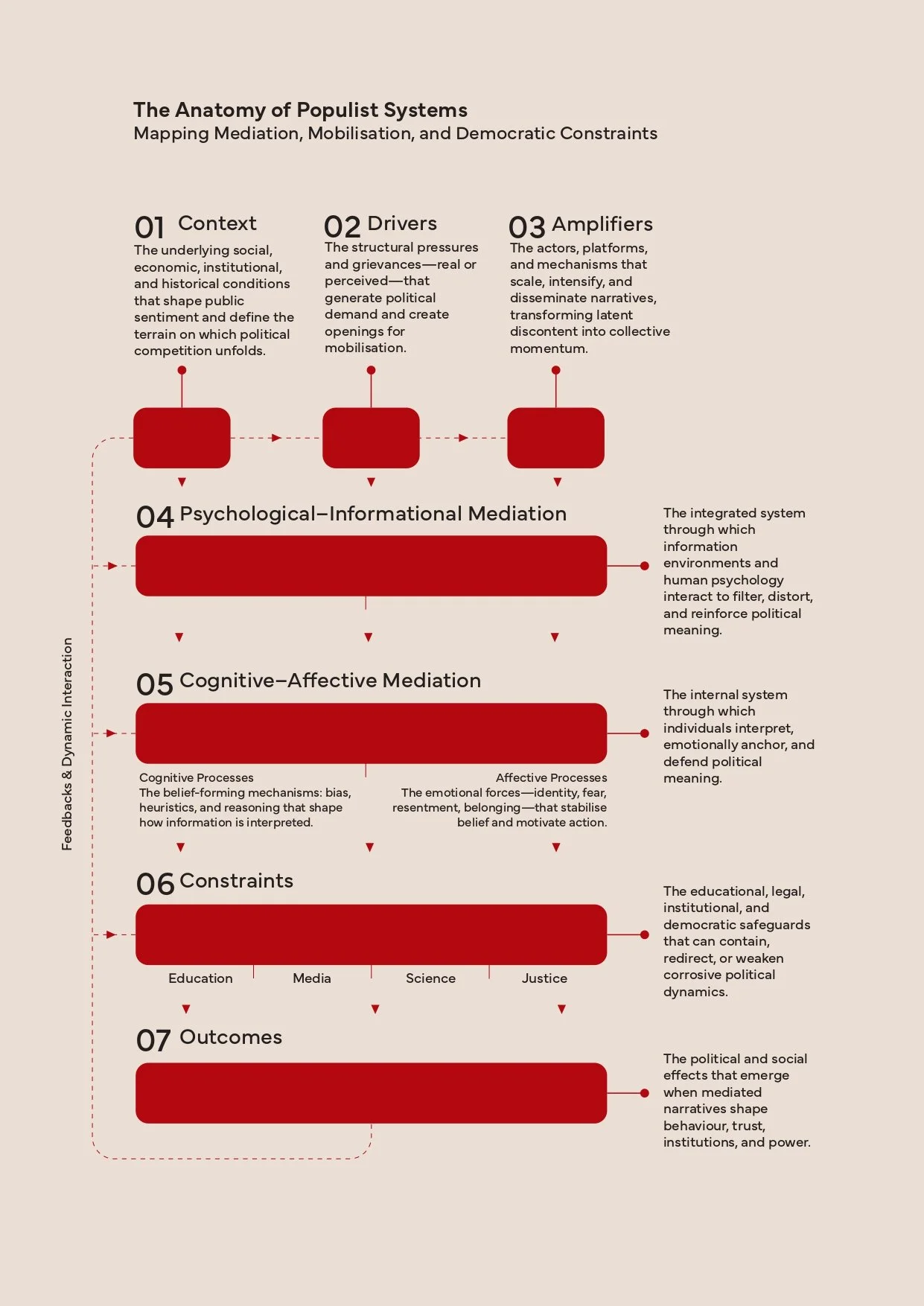
Figure 1: The Anatomy of Populist Systems & Democratic Constraints.
The Model
The model proposed here begins with four core components: context, drivers, amplifiers, and outcomes. These can be read left to right, and the infographic will present them that way, because sequence helps comprehension. But the deeper reality is recursive. Each element feeds the others. Outcomes reshape context. Amplifiers intensify drivers. Context alters what feels plausible. The system is dynamic rather than mechanical.
Context refers to the broad conditions within which political perception is formed. It includes economic pressures, inequality, inflation, technological disruption, migration, social fragmentation, cultural change, loss of institutional trust, and the diffuse but powerful sense that the world no longer works as it once did. Context does not dictate belief. It does something subtler and more important. It sets the horizon of plausibility. It shapes which explanations feel intuitive, which promises to feel credible, and which fears feel justified. A person living through prolonged insecurity or symbolic status loss does not need to be instructed to feel that something has gone wrong. The world itself furnishes that impression.
Drivers are the forces that convert those background conditions into political motivation. Grievance is one. Perceived threat is another. So are resentment, status anxiety, fear of decline, humiliation, moral injury, and the desire for clarity amid disorder. A driver is not simply a complaint. It is the mechanism through which context acquires emotional charge. Consider anti-elite sentiment. It is often treated as mere anti-politics, but this is too shallow. Anti-elite sentiment frequently emerges from an accumulated sense that institutions no longer recognise one’s experience, protect one’s interests, or honour one’s way of life. Likewise, the appeal of a “strong leader” need not begin as a rejection of democracy. It often begins as a longing for decisiveness in the face of drift, ambiguity, and institutional fatigue.
Amplifiers are the actors and systems that take latent sentiment and give it scale, rhythm, and repetition. Political leaders do this. Television networks do it. Social media platforms do it. Influencers do it. Peer networks do it. A narrative that exists only as a private suspicion remains weak. A narrative repeated by charismatic figures, validated by group belonging, rewarded by algorithms, and echoed across multiple channels begins to harden into a common sense. This is not only about misinformation in the crude sense of factual falsehood. It is about narrative salience. What is repeated becomes imaginable; what is imaginable becomes discussable; what is discussable becomes normal.
Outcomes are what this system produces in public life: hardened identities, polarisation, democratic cynicism, selective trust, institutional delegitimating, conspiratorial openness, leader worship, political aggression, or, in more resilient settings, a contained competition in which strong feeling is still bounded by rules. Outcomes matter not merely as endpoints but as new inputs. Once distrust becomes widespread, it becomes part of the next cycle’s context. Once a political community accepts that courts, science, journalism, and elections are all suspect when they produce unwelcome answers, the next falsehood enters a much more receptive environment.
The Two Mediation Systems
What turns these four core elements into a more cohesive explanatory model, however, are the two mediation systems that run through them. Without them, one is left with a familiar but incomplete story about grievance, propaganda, and democratic erosion. With them, the model becomes capable of explaining why messages travel differently through different populations, why refutation so often fails, and why objectively stronger evidence is frequently weaker in practice than identity-congruent narrative.
The first is Psychological–Informational Mediation, which can be understood as the filtering, framing, and trust-structuring of information before it is fully evaluated. This is the interface between the person and the information environment. It concerns what people are exposed to, which sources they regard as legitimate, how stories are pre-labelled before they are read, and how networks of trust and suspicion narrow the field of acceptable reality. In ordinary language, it is about what people see, who they believe, and what gets disqualified in advance.
This matters because few citizens encounter political information as isolated researchers weighing raw evidence. Most encounter it through shortcuts. A message comes attached to a source, and the source comes attached to a social meaning. A scientific report is not just a report; it may already be coded as establishment knowledge. A news investigation is not just a revelation; it may already be coded as partisan attack. An influencer’s video is not just a piece of content; it may be coded as authentic testimony from “someone like us.” Once information is pre-sorted in this way, a great deal of the interpretive work has already been done.
The second is Cognitive–Affective Mediation, which can be understood as the internal processing of information through identity, emotion, and psychologically protective reasoning. This is the domain of confirmation bias, motivated reasoning, cognitive dissonance reduction, identity-protective cognition, moral rationalisation, and affective reinforcement. In ordinary language, it is about how people make sense of what they see, and how they defend that sense-making when challenged.
Take confirmation bias. In technical terms, it refers to the tendency to notice, search for, and privilege information that confirms prior beliefs while discounting or forgetting information that does not. In political life, it often looks less like crude blindness than like selective seriousness. A person may subject hostile evidence to intense scrutiny while accepting favourable claims with minimal examination. That is not simply laziness. It is a directional form of reasoning. Motivated reasoning intensifies this further: the mind does not ask, with detached curiosity, “What is true?” It asks, more quietly and often unconsciously, “What can I accept while remaining coherent with who I think I am, whom I belong to, and what moral story I inhabit?”
Once one sees these two mediation systems clearly, many familiar frustrations become easier to understand. One sees why two citizens can watch the same event and emerge with different realities. One sees why contradiction does not automatically produce revision. One sees why people can be highly educated and still politically impermeable. The issue is not always intelligence. It is frequently the social and psychological organisation of cognition.
Against the Comfort of “Both Sides”
At this point a danger appears. Structural explanation can drift into moral flattening. If all political perception is mediated, if all individuals interpret reality through identity and emotion, if every community has its own trusted sources and background assumptions, then one might slide too easily into the conclusion that all sides are merely constructing reality in their own way. That conclusion is both seductive and dangerous.
It is seductive because it carries the appearance of sophistication. It allows the analyst to float above conflict and speak in the language of systems. It is dangerous because history offers abundant evidence that some narratives are not merely alternative framings of reality but organised assaults upon it—and that such assaults, when married to state power or mass mobilisation, can do immense harm to internal enemies, external enemies, minorities, dissenters, scientists, journalists, judges, and ordinary citizens. Authoritarian politics has always depended, in part, on the corrosion of the distinction between truth and usefulness.
This is where Brandolini’s Law enters the discussion with unusual force. The law is deceptively simple: the amount of energy required to refute falsehood is vastly greater than the amount required to produce it. The liar enjoys compression; the truth-teller must do the labour of reconstruction. Propaganda can be emotive, vivid, morally satisfying, and endlessly repeatable. Correction must be specific, sourced, qualified, often dull, and rarely viral. In a high-velocity media environment, this asymmetry is not incidental. It is a structural advantage.
Populist and authoritarian movements exploit this advantage repeatedly. They do so not only by making false claims, but by discrediting the institutions that adjudicate truth. Science becomes elitism. Journalism becomes conspiracy. courts become political. Universities become indoctrination. Expertise becomes arrogance. Evidence becomes merely one tribe’s rhetoric against another’s. The goal, in many cases, is not to make a lie universally believed in a precise factual sense. It is to exhaust the public’s confidence that any stable truth can be established at all.
That distinction matters enormously. Democracy can survive disagreement. It cannot easily survive epistemic collapse.
Evidence, Integrity, and the Values of a Modern Democratic Order
It is therefore necessary to state plainly what a structural analysis should not obscure. Not all claims are equally valid. Not all narratives are equally tethered to evidence. Not all political styles are equally compatible with human dignity, equal citizenship, or constitutional restraint. A society may debate tax rates, immigration thresholds, welfare design, energy transitions, or the balance between liberty and order. Those are political disputes. But the proposition that public life should remain answerable to evidence, that institutions should operate with integrity, and that human beings possess rights and equal worth before the law is not merely one optional aesthetic among others. It is the hard-won normative architecture of the modern democratic settlement.
These values are not perfectly universal in practice, and they have never been fully realised. But over the last century they have been institutionalised with remarkable breadth: in human rights regimes, anti-discrimination law, constitutional jurisprudence, administrative integrity systems, due process norms, public health institutions, scientific peer review, and international conventions. That architecture exists because modern societies learned, often through catastrophe, what happens when politics detaches itself from truth, restraint, and equal moral standing.
For that reason, integrity-based policy and evidence-based policy are not technocratic luxuries. They are containment mechanisms against degradation. Evidence-based policy does not mean politics without values; it means politics disciplined by reality. Integrity-based policy does not mean moral unanimity; it means that institutions should not lie, manipulate, extort, fabricate, or apply rules selectively. Values-based policy, in the democratic sense, should mean not the imposition of sectarian dogma but fidelity to principles that make plural coexistence possible: fairness, accountability, equality before the law, non-cruelty, and the protection of basic freedoms.
What Strengthening the System Actually Means
If that is right, then the policy implications are more demanding than standard calls for “better factchecking”, or “more civics” usually suggest. The answer is not to hope that good information will simply outcompete bad information in a deregulated attention market. It will not. The answer is to strengthen the entire containment system: education, media, science, justice, and the integrity architecture of public institutions.
Education is the first of these, and perhaps the deepest. A democracy that teaches students only to accumulate information without examining how claims are made, how evidence is weighed, how bias operates, and how emotions shape judgement is leaving them cognitively under-defended. Critical thinking is often invoked so casually that it sounds ornamental. It is not ornamental. Nor is scientific literacy. Nor is metacognition. These are protective capacities. They allow citizens to ask not only “Is this claim attractive?” but “How do I know this, why do I want to believe it, and what would count as disconfirming evidence?” OECD work on education and media literacy increasingly reflects this concern, including Finland’s long-running approach to media education as part of democratic resilience and the OECD’s move toward assessing media and AI literacy in future PISA cycles.
The media environment is the second pillar. Liberal democracies made a profound mistake when many of them treated the digital information sphere as though it were merely a neutral extension of free speech rather than a new infrastructure of behavioural shaping. The issue is not that opinion should be prohibited. It is that fact and opinion should be more clearly signalled; platform incentives should be more transparent; coordinated disinformation should face stronger institutional response; and public-interest journalism should not be left to die while engagement-maximising outrage machines inherit the field. The OECD now explicitly frames disinformation policy around transparency, integrity, accountability, and participation rather than around censorship, and Finland’s media literacy architecture is cited as a resilience measure against targeted disinformation and anti-democratic messaging.
Science is the third pillar. Modern economies do not become prosperous, healthy, and secure by replacing scientific method with performative intuition. They become those things by building institutions that reward evidence, testing, replication, expertise, and professional accountability. Populist politics often treats science selectively: celebrating it when it produces weapons, growth, or medical breakthroughs, while discrediting it when it imposes constraints or inconveniences identity. That selective attitude is corrosive. Public trust in scientific institutions is not automatic, but without it, policy becomes radically more vulnerable to panic, fantasy, and vested fabrication.
Justice is the fourth pillar. Courts, prosecutors, auditors, election bodies, anti-corruption agencies, ombuds institutions, and administrative law systems are rarely charismatic. That is precisely why they matter. They stand between grievance and arbitrary power. They ensure that political energy does not simply become political impunity. Across comparative indicators, countries with stronger rule of law, government effectiveness, and control of corruption consistently cluster among the world’s freest, most stable, and highest-performing societies, while the World Justice Project’s 2025 reporting warns that the global rule-of-law recession is deepening rather than easing.
The broader institutional picture points in the same direction. OECD reporting links trust in public institutions with satisfaction in public services and good governance practices; the Human Development Index continues to measure the long-run importance of health, education, and income together; and the World Happiness Report again places countries such as Finland at the top of global wellbeing rankings. Freedom House’s current country profiles for Finland, Denmark, and Sweden likewise show how strong protections for media freedom, judicial independence, academic freedom, and equal rights coincide with high levels of freedom and institutional confidence. These are not utopias, and they have their own conflicts and failures. But they demonstrate something essential: advanced societies do not become more prosperous, free, secure, and broadly satisfied by weakening evidence systems and integrity systems. They become so by strengthening them.
The implication is not that one can technocratically abolish populism. Nor is it that all anger at elites is irrational or all institutional trust deserved. Many grievances are legitimate. Some institutions do fail. Some experts do become insulated, arrogant, and politically inattentive. But a functioning democratic order must distinguish between reforming institutions and destroying their legitimacy; between criticising expertise and replacing it with spectacle; between broadening democratic participation and inviting epistemic anarchy.
A Story Through the System
This model was imagined and conceived—not through the breadth of disciplines that inform political science—but through observations and discursive conversations. An amalgam of those ethnographic encounters is hopefully useful in illustrating how the model works in lived form. Consider Jerry from a mid-sized American town that has experienced economic stagnation, industrial decline, and a gradual hollowing out of civic life. He is not destitute, but he feels diminished. The local factory no longer employs what it once did. The old forms of status in the town have weakened. His children seem to inhabit a cultural world he only partially recognises. The language of public life increasingly strikes him as coded against people like him. This is context: not a single cause, but an atmosphere of displacement, pressure, and symbolic loss.
From that context emerge drivers. He feels grievance, though he may not use that word. He feels that institutions speak in abstractions while his own life has become less secure and less legible. He feels that others are being seen while he is being ignored. He wants order. He wants recognition. He wants someone to say, plainly, that something has been taken from people like him and that it can be restored. When a political leader appears offering not a careful policy architecture but a story of betrayal and renewal—of corrupt elites, stolen greatness, and national restoration—the message lands. It does not land because it has been empirically demonstrated. It lands because it names an emotional reality.
He now enters the mediation zone. Through Psychological–Informational Mediation, he increasingly consumes information from sources that feel sympathetic, familiar, and unpatronising. He does not think of this as narrowing his world. He experiences it as finally hearing the truth. Other sources appear hostile before they are even read. Through Cognitive–Affective Mediation, he evaluates new claims in relation to his identity, his resentment, his hope for restoration, and his growing distrust of establishment institutions. Confirmation bias does its work quietly. Motivated reasoning does its work defensively. Contradictions are not impossible to see; they are simply less urgent than the moral story now animating his politics.
Then comes a specific claim—for instance, that an election was stolen. He does not examine affidavits, evidentiary standards, procedural law, and judicial findings as though he were a neutral tribunal. He asks, more or less unconsciously, whether the claim fits the world as he now understands it. Does it align with his sense that elites manipulate outcomes? Does it affirm the intuition that ordinary people are being cheated? Does it cohere with the larger narrative to which he has already committed himself? If so, the claim enters his belief system not as a factual proposition alone but as a symbolic confirmation of everything else.
Amplifiers then intensify the process. The claim appears on television, in clips, in group chats, in memes, in speeches, in conversations with peers. Its repetition does not prove it, but repetition shifts its social status. It becomes part of the ambient reality of his community. Meanwhile, courts reject the claim, electoral officials certify the result, journalists publish rebuttals, and experts explain the evidence. Yet these constraints now arrive too late or from discredited sources. Their formal authority remains intact, but their legitimacy has been stripped within his interpretive frame.
What this single narrative illustrates, however, is not an isolated pathway but a recurring pattern that extends well beyond any one individual, country, or political moment. Variations of this journey can be traced across a wide range of historical and contemporary phenomena, each shaped by its own context but animated by similar underlying mechanisms. One can observe it in the rise of Mussolini, where post-war dislocation, economic instability, and national humiliation were translated into a politics of restoration, embodied in a leader who claimed to give voice to a unified and aggrieved people while systematically discrediting institutional constraints. It can be seen in the persistence of climate change denial, where complex scientific consensus is filtered through identity, economic interest, and ideological framing, allowing individuals to dismiss overwhelming empirical evidence in favour of narratives that preserve coherence with their worldview. It is evident in the COVID-19 pandemic, where public health guidance became entangled with mistrust of authority, conspiracy narratives, and competing information ecosystems, giving rise to vaccine resistance not solely through ignorance, but through mediated processes of interpretation and belief defence. In each of these cases, the specific claims, stakes, and consequences differ, yet the structural logic remains strikingly consistent: context generates pressure, drivers translate that pressure into emotional and political energy, amplifiers distribute and reinforce narratives, and mediation systems filter and stabilise belief. The story, in other words, is not singular. It is replicable. The example traced here is simply one pathway through the system—one of many that could be followed, each revealing how individuals move through environments of information, identity, and emotion to arrive at positions that, from within their own frame of reference, are not only defensible but coherent.
These outcomes, viewed from the outside, may appear irrational. Viewed from within the system, it is coherent. That coherence is precisely what makes it powerful—and precisely why a democratic response must operate at the level of systems rather than merely at the level of correction.
The Work Ahead
The most difficult lesson in all of this is that the model is not a taxonomy of other people’s errors. It is an account of human political cognition under modern conditions. We are all vulnerable to mediated reasoning. We all inhabit contexts. We all rely on trusted shortcuts. We all defend identities. The difference is not whether these mechanisms exist, but whether our societies build institutions strong enough to discipline them.
That is my work ahead—that is our work ahead. To strengthen education so that citizens can reason about reasoning. To rebuild media systems that distinguish fact from performance. To defend science not as a priesthood but as a disciplined public method. To protect courts, regulators, auditors, and electoral institutions not because they are glamorous, but because they are barriers against arbitrariness. To insist that politics remain answerable both to evidence and to moral principles that preserve equal dignity.
Without such strengthening, populist and authoritarian styles will continue to enjoy the advantage of speed, simplicity, emotional vividness, and epistemic aggression. With it, liberal democracy at least regains its most important resource: the capacity not to abolish conflict, but to contain it within truth-seeking institutions and humane values.
That, in the end, is the deeper argument of this essay. The challenge is not merely to rebut falsehoods one by one, though that remains necessary. It is to build societies in which truth, integrity, and human dignity are not left to fend for themselves in the marketplace of grievance.
. . .
An Ethnographic Anatomy of Populist Systems Glossary of Terms
authoritarian predispositions Internal psychological leanings that make individuals more receptive to "strongman" leadership and the promise of social order during times of perceived threat or instability.
Brandolini’s Law The principle that the amount of energy needed to refute a falsehood is a magnitude larger than the energy needed to produce it, creating a structural advantage for rapid-fire misinformation.
cognitive-affective mediation The internal processing of information through the lens of identity and emotion; the mental "filter" used to defend one's worldview.
confirmation bias The tendency to notice and favor information that confirms prior beliefs while discounting evidence that contradicts them.
democratic erosion The gradual decline of democratic norms, institutional independence, and the rule of law within a society.
epistemic collapse A state in which a society can no longer agree on a shared reality because confidence in truth-seeking institutions has been systematically eroded.
ethnography A branch of social science focused on the systematic study of people and cultures; used here to understand the internal logic of political belief rather than just documenting external behavior.
horizon of plausibility The boundary of what an individual finds intuitive or credible, largely set by their background economic and social context.
identity-protective cognition A subconscious process where individuals dismiss factual information that would alienate them from their social or political group.
metacognition The process of "reasoning about reasoning"; the ability to examine how one's own thoughts, biases, and judgments are formed.
motivated reasoning A directional form of thinking where the mind subconsciously seeks to arrive at a conclusion that protects the individual's identity or sense of belonging.
populism A "thin-centred" ideology that frames politics as a moral struggle between "the pure people" and "the corrupt elite."
psychological-informational mediation The interface between a person and their information environment, involving the pre-sorting of sources based on trust and social meaning.
. . .
Foundations of Political Psychology & Ethnography
Achen, Christopher H., and Larry M. Bartels. 2016. Democracy for Realists: Why Elections Do Not Produce Responsive Government. Princeton: Princeton University Press.
Kahan, Dan M. 2017. Misconceptions, Misinformation, and the Logic of Identity-Protective Cognition. Cultural Cognition Project.
Stenner, Karen. 2005. The Authoritarian Dynamic. Cambridge: Cambridge University Press. Wason, Peter C. 1968. On the failure to eliminate hypotheses in a conceptual task. Quarterly Journal of Experimental Psychology.
Wolcott, Harry F. 2008. Ethnography: A Way of Seeing. Lanham: AltaMira Press.
The Dynamics of Populism & Authoritarianism
Levitsky, Steven, and Daniel Ziblatt. 2018. How Democracies Die. New York: Crown. Mudde, Cas, and Cristóbal Rovira Kaltwasser. 2017. Populism: A Very Short Introduction. Oxford: Oxford University Press.
Paxton, Robert O. 2004. The Anatomy of Fascism. New York: Knopf.
Institutional Resilience & Policy Frameworks
Freedom House. 2026. Freedom in the World 2026. Washington, D.C.: Freedom House.
Nygren, Thomas, and Ullrich K. Ecker. 2024. Education as a countermeasure against disinformation. Lund: Lund University Psychological Defence Research Institute.
OECD. 2024. Facts not Fakes: Tackling Disinformation, Strengthening Information Integrity. Paris: OECD Publishing.
OECD. 2024. Survey on Drivers of Trust in Public Institutions – 2024 Results: Building Trust in a Complex Policy Environment. Paris: OECD Publishing.
OECD. 2029. PISA 2029 Media and Artificial Intelligence Literacy. Paris: OECD Publishing.
UNDP. Human Development Index (HDI) and the Human Development Report. New York: United Nations Development Programme.
World Bank. Worldwide Governance Indicators (WGI). Washington, D.C.: World Bank.
World Happiness Report. 2025. World Happiness Report 2025. Oxford: Wellbeing Research Centre.
World Justice Project (WJP). 2025. Rule of Law Index 2025. Washington, D.C.: World Justice Project.
Media & Information Systems
Brandolini, Alberto. 2013. Brandolini’s Law (The Bullshit Asymmetry Principle).
Huddy, Leonie, and others, eds. 2023. The Oxford Handbook of Political Psychology, 3rd edition. Oxford: Oxford University Press.